
Spine & Nerve Care
From a nagging lower backache to sharp, shooting nerve pain down your leg back pain affects millions of people. Understanding the root cause is the first step toward lasting relief.
80%
of people experience back pain in their lifetime
40%
of back pain cases involve sciatica
90%
of cases resolve without surgery
What we treat
We specialise in the full spectrum of lower back conditions — both sudden injuries and long-standing chronic pain.
Acute lower back pain
Sudden onset pain from muscle strain, ligament sprain, or injury. Common after lifting, twisting, or an accident.
Chronic lower back pain
Persistent pain lasting more than 12 weeks. Often linked to degenerative disc disease, arthritis, or postural issues.
Slipped / herniated disc
The soft cushion between vertebrae bulges or ruptures, pressing on nerves and causing localised or radiating pain.
Nerve compression
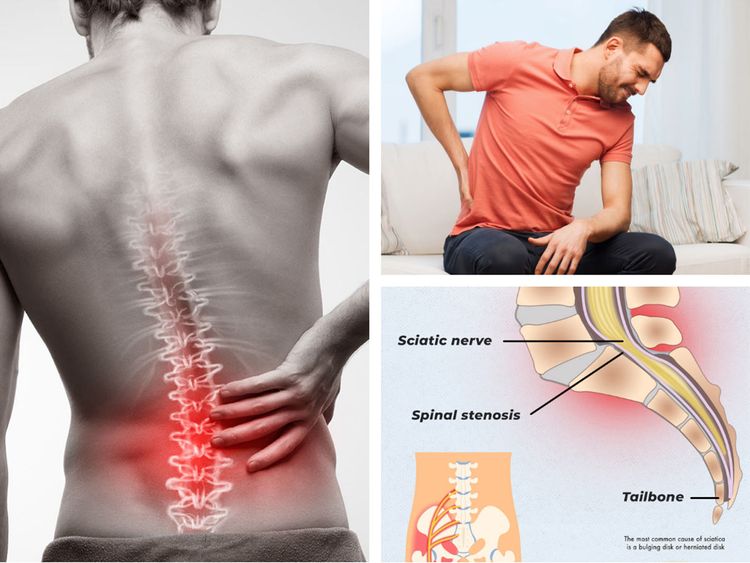
Narrowing of the spinal canal (stenosis) or bony overgrowth puts pressure on spinal nerves, causing pain and weakness.
Sciatica
Irritation of the sciatic nerve causes burning or electric pain radiating from the lower back through the buttock and down one or both legs.
Signs & symptoms to watch for
Symptoms vary by condition. Here are the most common presentations we see in our patients.
Dull, aching pain in the lower back or buttocks
Sharp, shooting pain down one or both legs
Numbness or tingling in thighs, calves, or feet
Muscle weakness in the legs
Pain that worsens with sitting or bending forward
Stiffness in the morning or after rest
Burning sensation along the sciatic nerve path
Difficulty standing straight or walking long distances
Pain relief when lying down or walking slowly
One-sided pain radiating below the knee
Seek immediate medical attention if you experience:
- Loss of bladder or bowel control
- Numbness in the groin or inner thighs
- Sudden severe pain after a fall or accident
- Progressive weakness in both legs
- Unexplained weight loss with back pain
- Fever alongside back pain
Common causes
Most back pain is mechanical in origin. Understanding what’s driving your pain helps us choose the right treatment path.
01. Disc herniation (slipped disc)
The gel-like nucleus of an intervertebral disc pushes through its outer ring and irritates nearby nerve roots — the most frequent cause of sciatica in adults under 50.
02. Degenerative disc disease
Natural wear of spinal discs over time reduces their height and shock-absorbing ability, leading to chronic stiffness and intermittent pain episodes.
03. Lumbar spinal stenosis
Narrowing of the spinal canal compresses nerves, causing pain and cramping in the legs that typically worsens with walking and improves with sitting.
04. Piriformis syndrome
Tightness or spasm in the piriformis muscle in the buttock irritates the sciatic nerve below it — a non-spinal cause of sciatica often missed on imaging.
05. Facet joint arthritis
Wear of the small stabilising joints in the spine causes local pain that often radiates into the hip and thigh — worse with extension and rotation.
06. Muscle strain & poor posture
Overworked or poorly conditioned back muscles, combined with prolonged sitting or improper lifting mechanics, are the leading cause of acute back pain episodes.
Diagnosis & investigations
Accurate diagnosis is essential. We use a combination of clinical examination and targeted investigations to pinpoint the exact cause.
Clinical assessment
Neurological exam, range-of-motion testing, straight-leg raise test and reflex checks.
MRI spine
Gold standard for visualising disc herniations, nerve compression, and soft tissue abnormalities.
X-ray (lumbar)
Evaluates bone alignment, fractures, spondylolisthesis, and disc space narrowing.
CT scan
Detailed bony anatomy imaging, used when MRI is contraindicated or for surgical planning.
NCV / EMG
Nerve conduction and electromyography studies confirm nerve damage and identify the affected level.
Blood tests
Rules out inflammatory arthritis, infection, or metabolic causes of back pain.
Treatment options
We follow a stepwise, evidence-based approach — starting with the least invasive therapies and progressing only when needed.
Conservative care
Physiotherapy & rehabilitation
- Targeted core strengthening exercises
- McKenzie method for disc-related pain
- Postural correction and ergonomic training
- Heat, ultrasound, and TENS therapy
- Manual therapy and soft tissue release
Medications
Pain & inflammation management
- NSAIDs (ibuprofen, naproxen) for inflammation
- Muscle relaxants for acute spasm
- Neuropathic agents (pregabalin, duloxetine)
- Short-course oral steroids for nerve pain
- Topical analgesic gels and patches
Interventional procedures
Minimally invasive options
- Epidural steroid injections (ESI)
- Nerve root block under imaging guidance
- Facet joint injections or radiofrequency ablation
- Trigger point injections for piriformis syndrome
- Platelet-rich plasma (PRP) therapy
Surgical options
When conservative care is insufficient
- Microdiscectomy for herniated disc with nerve compression
- Laminectomy / decompression for spinal stenosis
- Spinal fusion for instability or spondylolisthesis
- Endoscopic spine surgery (minimally invasive)
- Disc replacement for select younger patients
Frequently asked questions
How do I know if my back pain is muscular or a disc problem?
Muscular pain is typically localised to the back, eases with rest, and doesn’t radiate below the knee. Disc-related pain often comes with leg symptoms numbness, tingling, or weakness and may worsen when sitting or coughing. An MRI can confirm the exact cause.
Is sciatica always caused by a slipped disc?
No. While disc herniation is the most common cause, sciatica can also result from piriformis syndrome, spinal stenosis, facet joint cysts, or even a tumour. Proper diagnosis ensures the right treatment is chosen.
How long does sciatica take to heal?
Most acute sciatica episodes resolve within 4–12 weeks with appropriate physiotherapy and pain management. Chronic or severe cases may take longer. Injections or surgery are considered if there is no improvement after 6–8 weeks of conservative treatment.
Should I rest or stay active with back pain?
Bed rest is generally not recommended beyond 1–2 days. Gentle movement, walking, and guided exercise accelerate recovery by improving blood flow and preventing muscle deconditioning. Complete rest often makes chronic pain worse.
Can back pain come back after treatment?
Yes — recurrence is common, especially without lifestyle changes. Maintaining core strength, correct posture, a healthy weight, and ergonomic habits significantly reduces the risk of future episodes.
Book a spine consultation today
Our specialists will evaluate your pain, review your scans, and create a personalised treatment plan — from physiotherapy to advanced interventional care.Book an appointment ↗
Same-day appointments availableMRI & diagnostics on-siteNo referral required